
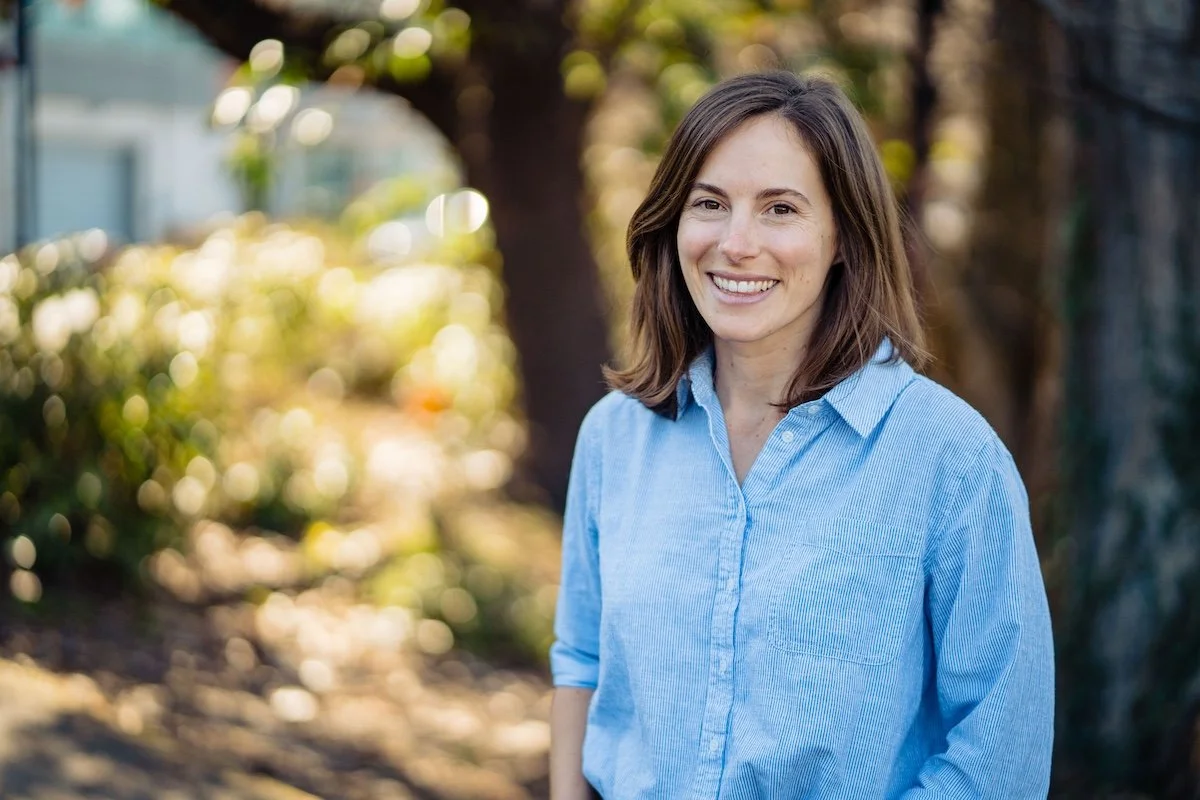
Photo by Cory Parris
Melissa Ilardo
Dr Melissa Ilardo is a rare scientist-storyteller whose passion extends beyond scientific discovery to the transmission of science to the general public. An evolutionary geneticist who is comfortable speaking eight languages, she translates genetic data into narratives of human resilience. Melissa is Assistant Professor of Biomedical Informatics at the University of Utah and the founder of the Superhuman lab. In her work, she is redefining medical genetics by focusing on the biological basis of strength and resilience rather than disease. Her discoveries have uncovered evolutionary secrets that enable superhuman abilities in human populations: from the Bajau Sea Nomads of Indonesia, who free dive to seventy meters using nothing but a weight belt, to the Korean Haenyeo, who continue harvesting abalone underwater throughout their pregnancies. Her science has already attracted more than $2.3 million in competitive funding, including multiple Office of Naval Research awards aimed at translating evolutionary adaptations into next-generation therapeutics.
Melissa’s scientific authority is anchored in elite training and relentless innovation. Following an undergraduate degree from Princeton University, she earned her PhD in Evolutionary Genomics at the University of Copenhagen. She ‘bet her degree’ on an original and untested idea: that a specific population of humans had evolved to dive. The resulting work, a first author paper in the prestigious scientific journal Cell, changed our understanding of human evolution and is now being taught in classrooms around the world. She has published 15 other peer-reviewed papers, including in the high-impact journals Nature, Science and Current Biology.
Scientific breakthroughs are only a small part of Melissa’s story. Her research succeeds because of her commitment to meeting communities on their own terms. She has logged countless hours bouncing around the back of a pickup on dirt roads, bailing water from a sinking outrigger canoe, and dodging potholes on a motorcycle to reach the communities with whom she partners, often introducing herself and her science in one of the many languages she speaks. By connecting on a personal level and listening to concerns of participant communities, she works to break down barriers that have kept marginalised populations at the periphery of biomedical discovery.
Melissa is currently at work on a book titled Vitruvian Woman: How the Resilience of Mothers Shapes Human Evolution, to be published in 2028 by Riverhead (World).